Claude Cowork Comes to Mobile and Web: The Agent Works Across Your Devices and Continues in the Background
Anthropic launched Claude Cowork on mobile and web, moving the agent across devices to run in the background. It revealed striking data showing most users don't code but do 'the work around the work.'
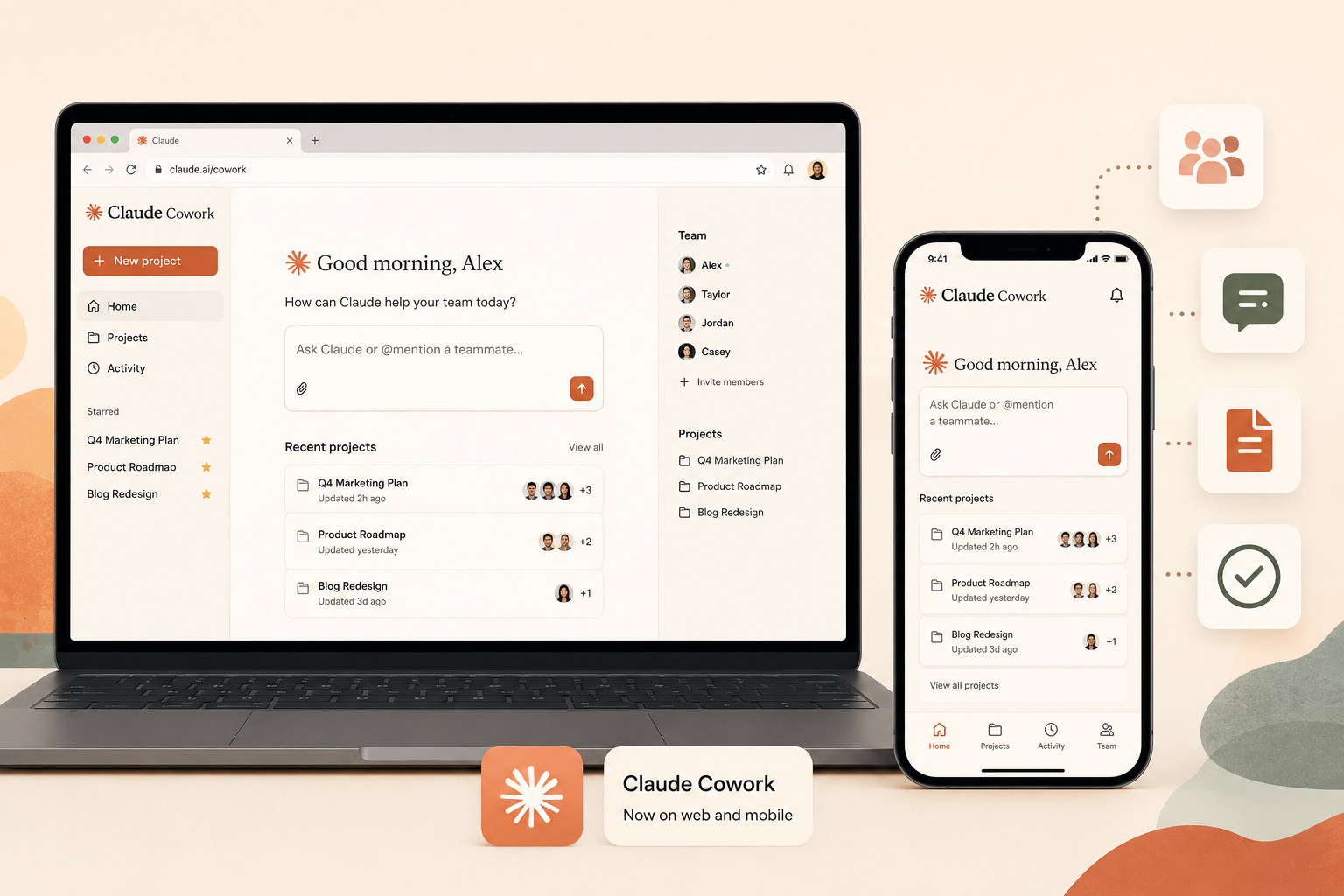
"Your work goes everywhere with you, and keeps going without you." With this phrase, Anthropic summed up its new update launching Claude Cowork on mobile and web, moving the agent that had been confined to the desktop into a cross-device platform. The core idea: you start a task on your laptop, it continues automatically in the background, and you review it from your phone — even after you close the app entirely. The update was announced beginning in beta for Max plan subscribers, expanding to other plans in the coming weeks.
What Is Claude Cowork, Anyway?
As a reminder, Cowork is a tool Anthropic launched in early 2026 for non-programmers: it uses the same agentic architecture that powers Claude Code, but without needing a terminal. Instead of responding to prompts one at a time, you describe the outcome you want, and the tool executes a complete multi-step task: organizing files, generating documents, building Excel spreadsheets with working formulas, and PowerPoint presentations. What's new today is that sessions now run remotely on Anthropic's servers, following your account across computer, web, and phone rather than staying confined to a single open device.
What Does "On Mobile" Exactly Mean?
Here is an important clarification that prevents misunderstanding. The update does not mean the agent will automate tasks on your phone itself. Rather, the phone acts as a "remote control": you follow what Claude is doing on your computer, and even start new tasks, while the actual execution stays in an isolated environment on the servers. To access the feature, update the Claude app on iOS or Android and look for the Cowork tab in the sidebar. Most importantly, Anthropic updated the tool to run tasks in the background, whereas it previously required a stable connection and an open device.
The Surprise in the Numbers: Most Users Don't Code
The launch was accompanied by the release of striking usage data from 1.2 million anonymized Cowork sessions (between May 11 and 31, from more than 600,000 organizations). The surprise is that software development represented only 8.7% of usage. The biggest share went to what Anthropic calls "the work around the work": creating reports, spreadsheets, presentations, and routine business operations — tasks that span every role but rarely sit at the core of anyone's job description. Coding was followed by categories like DevOps (7%), research and intelligence (6.4%), and data analysis (5.8%). This data reveals that the biggest opportunity for AI agents may be in routine office work, not in coding as often assumed.
Unifying Chat and Agent
The announcement carries a further direction: Anthropic intends to merge "Chat" and "Cowork" into one space sharing the same files, so a task launches from the same message box where you start a regular conversation. This will appear first on the web and desktop app. The company also plans to merge "Projects" and "Artifacts" later. The stated goal is to simplify the experience: a single interface where you converse with Claude and hand it computer tasks together.
Permissions and Privacy: A Point Worth Attention
Any agent that accesses your files raises obvious security questions, and users have previously expressed concern about the broad permissions these tools require. Anthropic says Cowork sessions run in an isolated sandbox on its servers, separate from your computer and network, and that Claude only reads and writes in folders you authorize, showing its plan and waiting for your approval before any sensitive action. Nonetheless, the practical rule remains that granting an agent permission to read, write, and act on your behalf is a decision that calls for precisely configuring permissions and reviewing sensitive steps, especially with important files.
This update comes within a fierce race over agents involving Google, OpenAI, and Microsoft. But what distinguishes Anthropic's move is that it reads its own data: instead of chasing the programmer market alone, it heads to where knowledge workers actually spend most of their time — "the work around the work." For the user, this opens a practical door to delegating recurring office tasks across their devices, provided they balance the convenience of automation with awareness of the permissions they grant.
Newsletter
Enjoyed this?
Subscribe and get every new article and news post straight to your inbox.