Frontend Frameworks in 2026: React, Vue, Angular, and Svelte
2026 is not the year of a winning framework, but of tool specialization. A look at the deep trends converging the frameworks and how to choose.
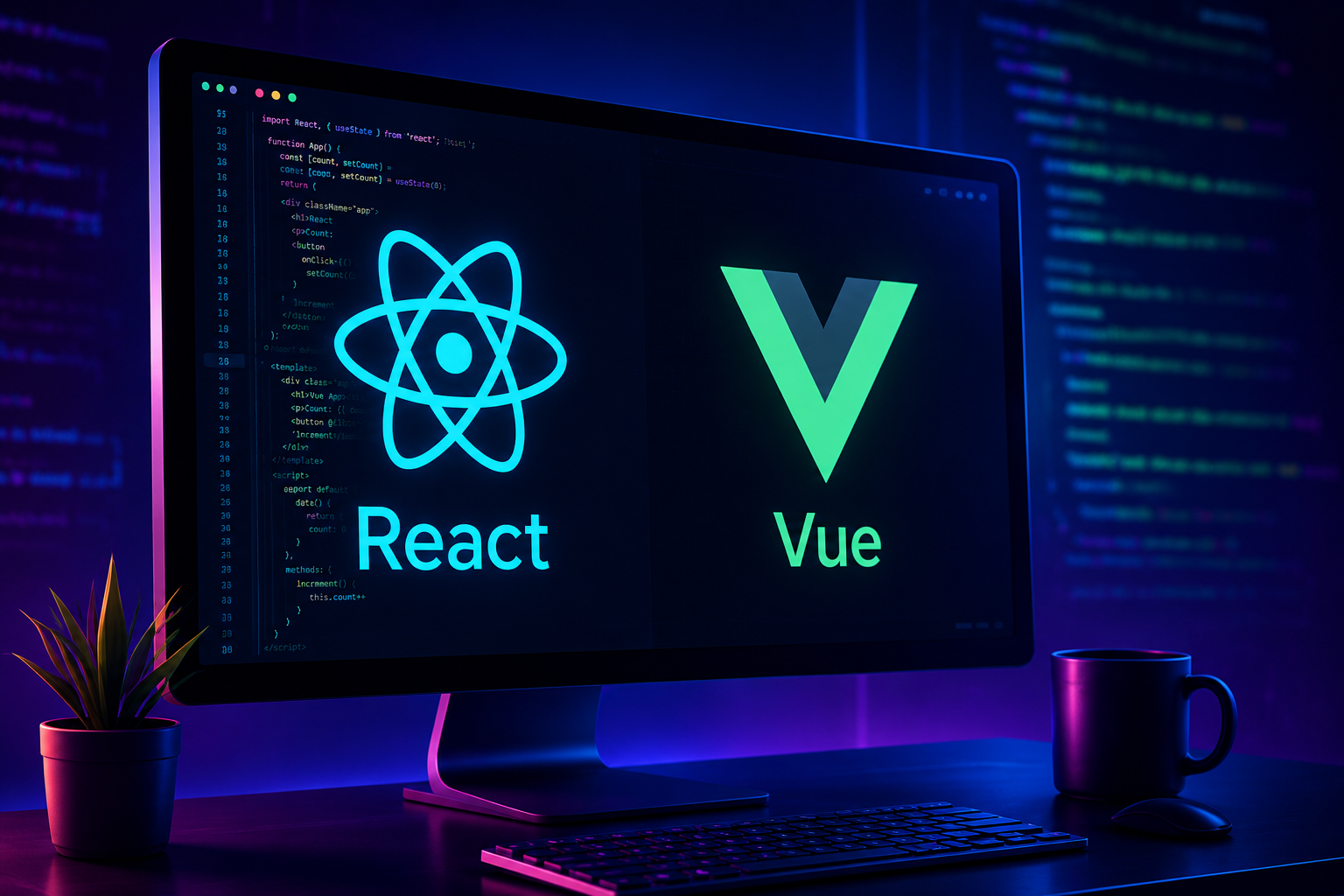
Every year poses the same question to development teams: React, Vue, Angular, or Svelte? What is striking in 2026 is that the answer is no longer about which one defeats the others, but about how to choose the right tool for a project's context. More importantly, the fundamental differences between the frameworks are beginning to fade as they converge around shared architectural ideas.
The Current Numbers
React still dominates with roughly 68% market share among frontend frameworks, while Vue holds steady at about 18%, and Svelte continues its fastest growth despite remaining at a smaller share of around 8%. These figures reflect a practical reality: React remains the default choice in terms of ecosystem breadth and ease of hiring, while the two alternatives gain ground in specific contexts.
The Leading Trend: Signal-like Reactivity
The clearest trend in 2026 is the industry-wide convergence toward a signal-based reactivity model. Angular has already standardized it, Vue is advancing fine-grained tracking through Vapor mode, and the React Compiler is pushing the ecosystem toward more declarative reactive patterns. The expected result: more predictable updates, a smaller reactive footprint, and fewer unnecessary re-renders across all major frameworks.
The Second Trend: Edge Rendering and Streaming
Another important shift is the growing dominance of edge-side rendering and progressive streaming. Frameworks are increasingly optimizing for a very low time-to-first-byte by pushing hydration and routing logic closer to the edge. This means the conversation has moved from component logic to hydration strategies, rendering, and compiler-driven optimizations.
Where Does Each Framework Excel?
React remains the default for breadth, ecosystem, and hiring, especially with Server Components maturing in React 19 and its compiler handling memoization automatically. Vue stays attractive for teams wanting a clean developer experience, moderate structure, and a gentler learning curve, and Vapor mode has noticeably narrowed the performance gap by letting eligible components skip the Virtual DOM. Angular remains suited to structured enterprise software with strong conventions, while Svelte stays a focused choice for teams that prioritize speed and accept a smaller ecosystem.
A Deeper Shift Beneath the Surface
More important than the framework names is what is happening underneath: frontend development has become more typed, more performance-sensitive, and more tied to full-stack concerns. TypeScript is now effectively mandatory, as it directly affects setup speed, refactoring safety, and the reliability of AI-assisted coding. Frameworks that adopt types natively give coding assistants more precise context and reduce errors.
How to Choose?
The practical rule is simple: if you want ecosystem breadth and ease of hiring, choose React. If you want a clean developer experience, moderate structure, and fast setup, choose Vue. If you need a structured enterprise framework with strict conventions, choose Angular. And if your product is performance-sensitive and your team accepts a smaller ecosystem, consider Svelte. But do not let ecosystem size override product fit; some teams will move faster with Vue or gain more consistency with Angular.
Conclusion
2026 is no longer the year of a winning framework, but the year of tool specialization. Differences are converging at the performance level, and the real decision revolves around fit between product, team, and long-term maintainability. Those who understand the deeper trends — fine-grained reactivity, edge rendering, and mandatory typing — are better positioned to make a decision that lasts for years.
Was this article helpful?
Newsletter
Enjoyed this?
Subscribe and get every new article and news post straight to your inbox.