Falsely Accused of AI: When a Student Is Punished for Work They Wrote Themselves
Students who wrote their own essays but were falsely accused by AI detectors, with their evidence refused. Documented stories from Adelphi, UC Davis, and Michigan, and their lessons.

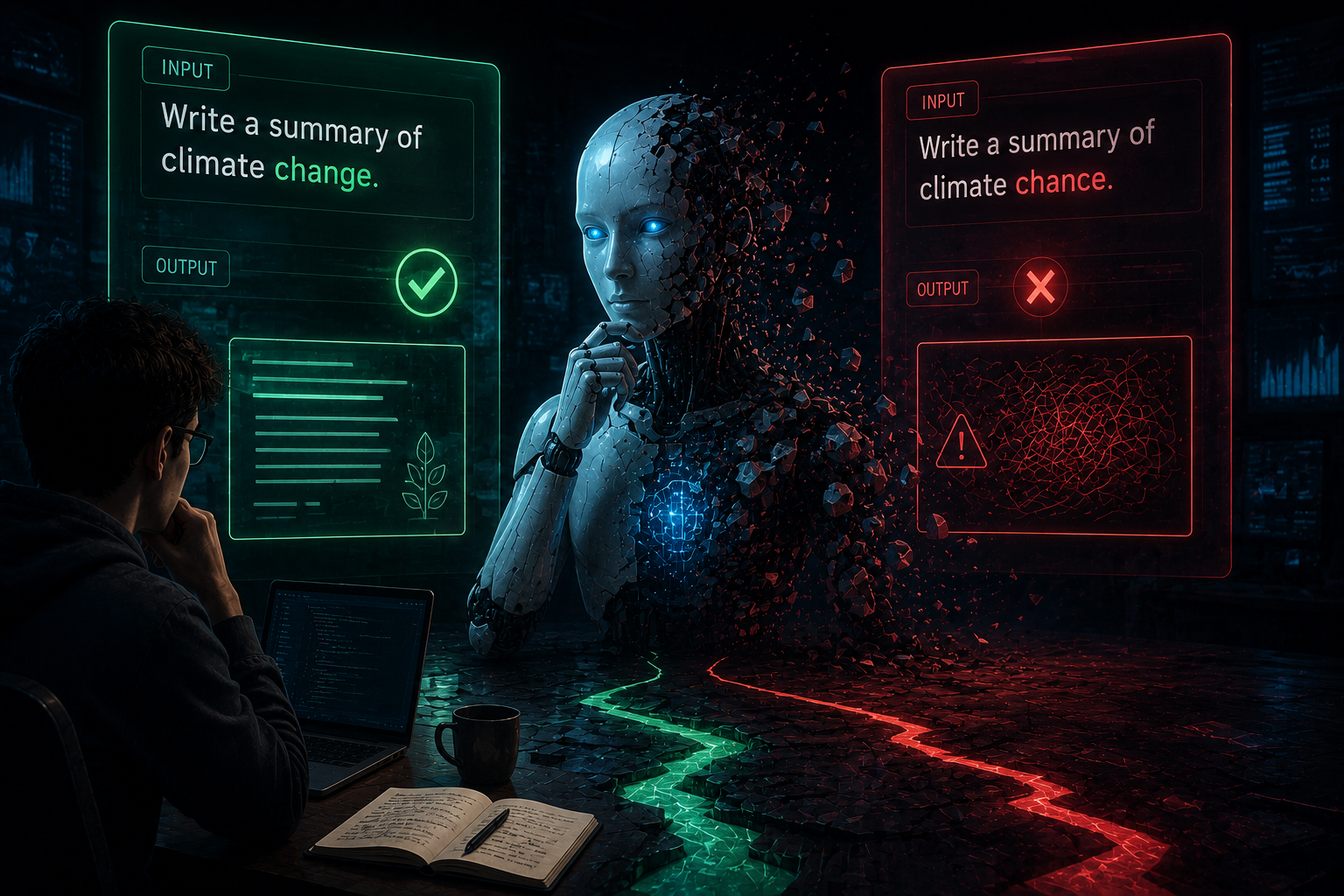
Imagine spending long hours writing a college essay with your own effort, then being accused of not writing it at all — that an "artificial intelligence" wrote it for you. The only witness against you is an automated detection tool that produced a number, and you have no way to prove your innocence because the institution treats the tool's output as conclusive truth. This is exactly what a growing number of students around the world are experiencing, in one of the most painful ironies of the AI era: being condemned by an algorithmic error for a crime you did not commit.
The Story of Orion Newby
At Adelphi University in New York, student Orion Newby was accused of using ChatGPT to write a history essay. A professor reported it to the university, and the university agreed with the accusation. But Newby strongly denied it, explaining that he had spent between 15 and 20 hours on the work, and that the help he received was not from AI, but from tutors within the university's Bridge Program — a program dedicated to assisting students with special learning and neurological needs, of whom he is one. Despite this, the university stood by its decision in court papers, so Newby turned to the courts.
The cruel irony is that the student who needs extra support because of his condition had that very support used as evidence against him, as if doing the work well had become an accusation.
Not an Isolated Case
Newby's story is no exception. At the University of California, Davis, student William Quarterman discovered he had received a zero on a take-home exam, along with an accusation of using ChatGPT and a referral to the academic integrity office. The student fought a battle to prove his innocence and later succeeded in clearing his name. At the University of Michigan, a student suffering from obsessive-compulsive disorder and anxiety filed a lawsuit accusing the university of having her professors interpret her condition's symptoms as "signs" of AI use, and that she presented proof of her innocence but was blocked from graduating anyway.
One of the lawsuits stated that the accusations were built on "subjective judgments about writing style, and on self-confirming automated comparison outputs generated using the student's own outlines and content." That is, the tool compared the student's work to itself and then "concluded" a match.
The Core Problem: A Tool Not Designed to Be Evidence
The tragedy lies in the fact that AI detection tools themselves do not claim infallibility. Turnitin explicitly warns that its model "may not always be accurate, and may misidentify human-written text," and recommends it not be used alone as a basis for actions against a student. OpenAI itself acknowledged that its research did not show these detectors to be reliable enough, given that educators might make decisions with lasting consequences for students based on them. Yet many institutions treat these outputs as conclusive proof.
Who Is Most Vulnerable to Injustice?
More dangerously, the error is not entirely random, but tends to strike specific groups. Students who learned English as a second language, science students who write in a methodical, structured style, and students on the autism spectrum are all more vulnerable to false accusation, because their "orderly" style resembles what the tool expects from machine text. This prompted universities like Vanderbilt to disable the Turnitin detector entirely after it turned out to flag non-native English speakers and students with learning difficulties at an unfair rate. Studies indicate that most commercial detectors falsely classify about one in every hundred human texts as machine-generated; in a class of thirty students, this means at least one innocent student could be accused every few assignments.
What to Do If You Are Falsely Accused?
If you face this situation, early and organized action matters. Always keep evidence of the authoring process: multiple drafts, the revision history in your document editor showing how the text evolved over time, and your initial notes. Respond to the accusation calmly and professionally the same day if possible, and ask for clarification of the basis on which the accusation was built. Ask about the appeal mechanism: can it be escalated to a department head or an independent committee rather than leaving the accuser as the judge? And present the institution with proof that detectors are unreliable, relying on the manufacturers' own admissions.
The Deeper Lesson
These stories are not a call to deny that real AI cheating exists; it exists and has indeed grown. But they are a warning against a systematic error: turning an imprecise, probabilistic tool into a final judge, and closing the door to fair human review. Academic justice requires that the burden of proof remain on the accuser, that every student have a right to genuine review before a neutral party, and that a numerical score from a tool that admits its own limitations not be used as the sole basis for destroying an academic future.
Conclusion
For a student to be denied their right because they did their work well, then prevented from proving it, is an irony that sums up the greatest danger of blindly relying on algorithms. The solution is not to reject the technology, but to put it in its proper place: an indicator that calls for human verification, not a final, unreviewable verdict. Until institutions adopt this principle, the student's best shield remains documenting their writing journey step by step — for today's drafts may be tomorrow's proof of innocence.
Was this article helpful?
Newsletter
Enjoyed this?
Subscribe and get every new article and news post straight to your inbox.